A few 'Investigate the Landscape' authors are celebrating something today!
Rose-Marie celebrated Lammas
Feb 2nd, give or take a day or two, is Lammas for those of us in the Southern Hemisphere who follow the neo-Pagan Wheel of the Year. It is supposed to be the first of the three harvest festivals, but that is not quite reality in my area. Our growing seasons are obviously not the same as in Europe, where the 'Wheel of the Year' came from, and at this time of year the harvest for some crops is finishing up around about now (give or take a month or two) and others are being sown (give or take a different month or two!)
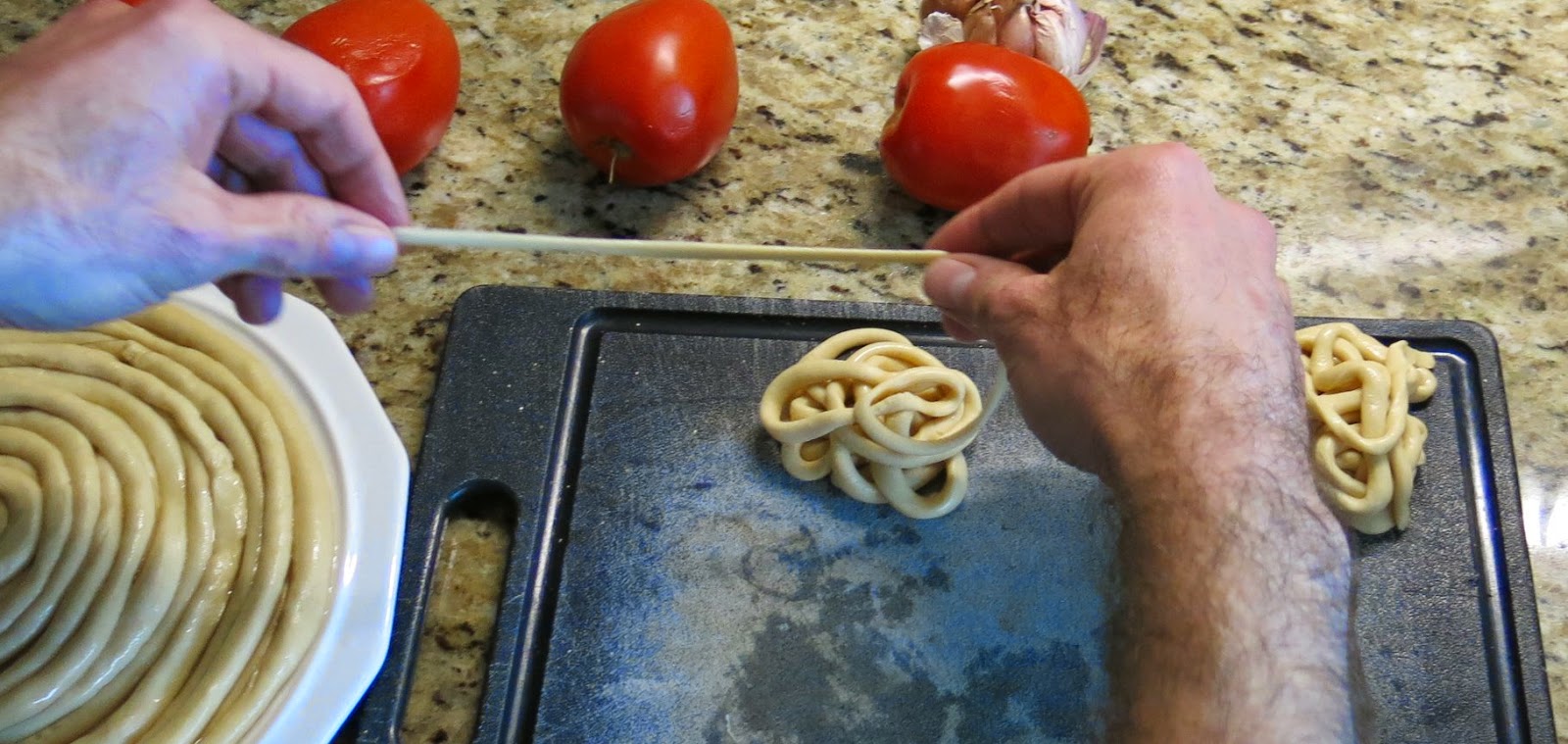
In my home garden, I've been harvesting leeks for several weeks, but nothing else is ready! But I still wanted to harvest something, so Daughter and I made our second attempt at cheese making. Here's a pic of the cooling ricotta! Or what will be the ricotta when it has cooled and drained!
The intention is to eat it with the first ripe tomato from my mum's garden. She does not celebrate Lammas herself, but is all in favour of home made cheese and home grown tomatoes. I hope to have better luck with tomato growing myself next year. This year, none of my seeds even sprouted and I didn't notice until it was too late to try again.
Now, if you are waiting for the devilish, baby eating part of my Pagan celebration, I'm afraid you will be disappointed. The other thing I do for Lammas is even more mundane than cheese making. I wash blankets. See?
Lammas may well be the beginning of autumn in the Northern Hemisphere, but we've got another month of summer, at least, and the worst part of summer too. Lammas is the last spoke of the Wheel I can be sure to get my blankets dry. Alain de Botton talked about holy days as being appointments with ideas. In this case, I think that is a very good idea. It would be so easy to forget to wash blankets and wouldn't I regret that when the weather cools down and I pulled out that nice fluffy blanket featured above, and found it too dusty to use and the weather too drizzly to wash it? Yes indeedy, so Lammas is my appointment with blanket washing.
______________________________
Amira celebrated Candalaria
I live in Mexico right now so Candelaria is the holiday for February 2nd. For a few years now, starting before we lived in Mexico, I've been taking the tree down on February 2nd. Not only is it one of the traditional end dates for the Christmas season, I also like to have the light from the tree during for the three dark months of the northern hemisphere. It's not as dark in central Mexico as it is farther north, but I like the tradition anyway. February 2nd is still firmly winter in other places I've lived like Idaho and Kyrgyzstan, but it's the end of "winter" in Mexico and we're starting to warm up for the hot, dry spring.
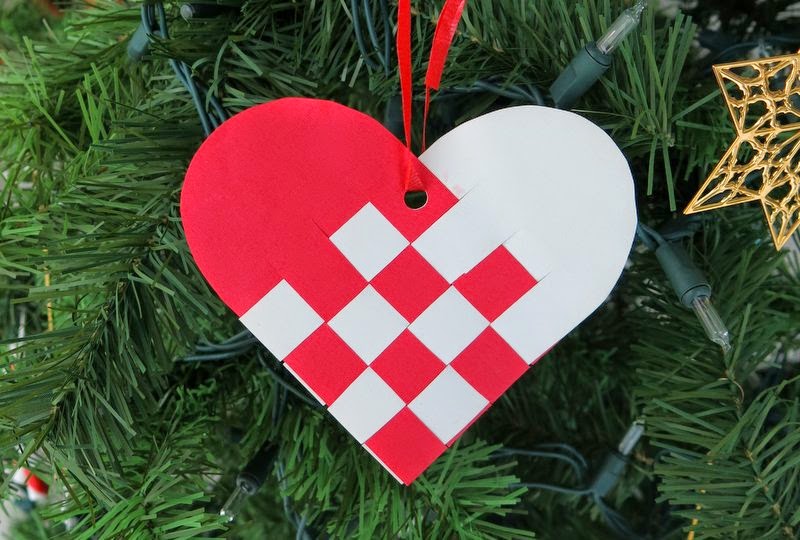
I love putting the tree up and taking it down because we have ornaments from so many different place we've lived.
Another tradition that we've picked up in Mexico and that we'll keep after leaving is making tamales on Candelaria. On Kings Day, January 6th, most Mexicans eat Kings Bread, or Rosca de Reyes, that has a little Jesus figurine baked into it. Whoever gets the figurine has to provide tamales for everyone on February 2nd. The tamales come from an older pre-Hispanic Aztec festival in February that honored Tlaloc, the rain god. Most of the rituals from all of those festivals aren't practiced anymore, but a few Christian holidays like Candelmas and especially All Saints Day have Mexican traditions included. So I made horneados and lots of steamed tamales like pollo verde, chocolate, and rajas con queso. Yum.
_________________________
Aura celebrated Imbolc
I use the sabbats as well as other holidays as a way to focus my energy and thoughts during the different times of the year. For me, Imbolc is a time of hope, of hidden beginnings, of things stirring underneath the surface. It's a good time to focus on beginnings, to think things through, to look at where I'm at now and where the path I'm on will lead.
I try to associate the sabbats with something more familiar to me, so in this case, it would be Groundhog Day. This is the time that, much like the groundhog looking for his shadow, I can look around me and forecast what is likely to come. (Talking about the idea behind the groundhog seeing his shadow...not that I actually believe the groundhog is going to predict the onset of spring.)
Below is a couple of pictures of my altar...which simply looks like a little seasonal home decor, except that each item has meaning and is there to remind me of what the “theme” is for this season.
The wall art is a circle and a spiral, representing the wheel of the year and the changes it brings. Each turn of the wheel brings new things into focus, but everything is connected.
The hedgehog is the closest I found to a groundhog. It burrows, but not as deeply. And it's really cute! Here's a link talking about hedgehogs and their spirit meanings: http://spirit-animals.com/hedgehog/
African violets represent spirituality. I'm still trying to get my violet to bloom again, but at least she seems to have recovered from being repotted and appears to enjoy her spot at the center of my altar.
The two-tiered stand with bowls was a wedding gift. It’s the closest I have to a well and will serve as a stand-in. The well is a symbol of Brighid, the goddess associated with Imbolc. You can read more about her here: http://www.paganspath.com/magik/celtic/imbolg.htm. Personally, the gods and goddesses are not beings that I worship or even believe really exist. I consider them representations of differing aspects of The Universe. They bring to light many things to think about and consider: lessons to be learned and principles to be applied.
The top bowl holds moonstone, which is associated with the goddess. I particularly feel the need to have more of her influence in my life. It is a definite counter to balance out the patriarchal influences.
The bottom holds pinecones and sweetgum balls. Both are seeds, of a sort, particularly easy to find this time of year (at least in my backyard they are!) and represent beginnings and rebirth as well as abundance. Both are protective and purifying/repelling of negativity. Both are considered masculine, but I offset this by placing them inside a bowl, which is feminine. I don’t wish to ignore or to shut out the masculine, because it is as necessary as the feminine, but simply to balance it out.
I always have at least one candle, to represent the Universe, and to represent magick and spirituality. In this case, I have one white candle.
Imbolc is sometimes called Candlemas or the Festival of Lights (though they may actually be different cultural or religious observations of the same turning of the wheel). The candles and lights symbolizes the warmth of the flame banishing the cold of winter and the coming of spring. To represent the coming thaw, I have lighted floral stems mixed with willow branches. Willow is also associated with Imbolc, though I haven't researched it that much...still, I like the lights mixed with the willow stems.
There are a lot of personal preferences mixed in my altar. Some things I place on it just because I think it adds a “finishing touch.” But altars are personal things, and I believe it’s okay to add things just because it feels right to you. The spirit often communicates very subtly. In my process of learning, I have often found that my attraction to something actually reflects a spiritual significance to which I was previously unaware.
I will leave this altar up until Ostara, March 21, when I will change it to reflect that sabbat and the upcoming Easter holiday.
____________________
Rose-Marie
was one of those enthusiastic planners who began researching when she was pregnant with her first. She wanted to homeschool because it sounded like an affordable adventure, then she met her kids personally...
Her young daughter has Echolalia, dyscalculia and some processing issues so isn't speaking fluently yet; but she is making good progress as they work and play in Central Victoria, Australia.
Amira
is a peripatetic homeschooler currently living in Mexico. She loves food, books, geysers, ruins, rain, and rocky beaches. She blogs at http://amiralace.blogspot.com.au
Aura is a homeschooling mom in North America and an eclectic witch who is still “in the broom closet” with most who know her in person. She does not ascribe to any particular religion, believing that spiritual paths are unique and personal. She enjoys learning and writing about the spiritual and magickal.